

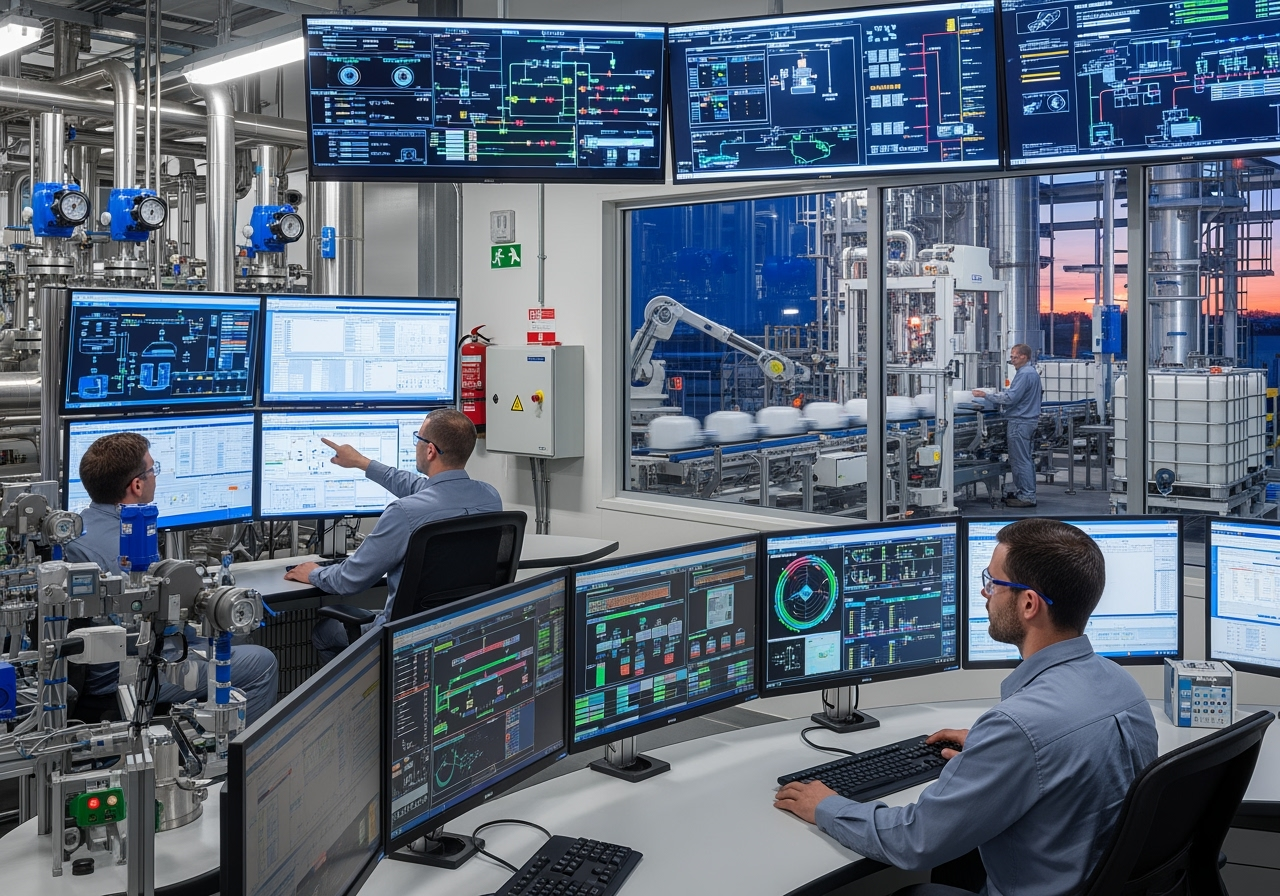
The global chemical industry is experiencing a paradigm shift as chemical plant automation becomes the cornerstone of operational excellence. With increasing regulatory pressures, rising energy costs, and growing demand for sustainable production methods, chemical manufacturers are turning to advanced automation technologies to maintain competitive advantage while ensuring worker safety and environmental compliance.
The Evolution of Chemical Manufacturing: From Manual to Smart
Traditional chemical plants relied heavily on manual operations, creating bottlenecks, safety risks, and inconsistent product quality. Today’s smart manufacturing approach leverages Industrial Internet of Things (IIoT), artificial intelligence, and machine learning to create self-optimizing production environments that respond dynamically to changing conditions.
Chemical plant automation encompasses everything from basic process control to sophisticated digital twin technology that creates virtual replicas of entire production facilities. This evolution represents more than technological advancement—it’s a fundamental reimagining of how chemical processes can be optimized for maximum efficiency and safety.
SCADA Systems: Beyond Traditional Monitoring
Modern SCADA for chemicals has evolved far beyond simple data visualization. Today’s systems incorporate advanced process analytics, predictive modeling, and real-time optimization algorithms that continuously improve plant performance. These intelligent systems can:
- Automatically adjust process parameters based on raw material variations
- Predict equipment failures weeks before they occur
- Optimize energy consumption across multiple production units
- Ensure regulatory compliance through automated reporting and documentation
The integration of cloud-based SCADA solutions enables global chemical companies to standardize operations across multiple facilities while maintaining local control and customization capabilities.
Advanced Material Handling: The Logistics Revolution
Material handling in chemical plants has been revolutionized by autonomous guided vehicles (AGVs), robotic systems, and smart inventory management. These technologies address critical challenges including:
Automated Chemical Storage Systems
Intelligent warehousing solutions utilize RFID tracking, barcode scanning, and automated storage retrieval systems (ASRS) to maintain precise inventory control while ensuring proper storage conditions for temperature-sensitive and hazardous chemicals.
Precision Dosing and Batching
Automated batching systems equipped with load cells, flow meters, and analytical instruments ensure recipe accuracy within 0.1% tolerance, dramatically reducing waste and improving product consistency.
Seamless Supply Chain Integration
Enterprise Resource Planning (ERP) integration connects material handling systems with procurement, production planning, and customer delivery schedules, creating a seamless flow from raw materials to finished products.
Navigating Hazardous Area Challenges with Smart Technology
Operating in hazardous areas requires specialized automation solutions that exceed traditional safety standards. Modern approaches include:
Intrinsically Safe Wireless Networks
Wireless sensor networks designed for Class I, Division 1 environments enable comprehensive monitoring without the risks associated with traditional wired installations.
Advanced Gas Detection Systems
Multi-gas analyzers integrated with emergency response systems provide continuous atmospheric monitoring with automatic ventilation control and personnel evacuation protocols.
Explosion-Proof Robotics
ATEX-certified robotic systems perform dangerous tasks in explosive atmospheres, eliminating human exposure while maintaining operational continuity.
PLC-SCADA Integration: The Foundation of Smart Operations
PLC-SCADA integration creates the backbone of modern chemical plant automation, enabling:
Distributed Control Architecture
Redundant control systems ensure continuous operation even during equipment failures, with hot standby configurations providing seamless failover capabilities.
Edge Computing Integration
Edge devices process critical data locally, reducing network latency and ensuring real-time response to safety-critical situations.
Cybersecurity Framework
Industrial cybersecurity measures protect against cyber threats while maintaining operational efficiency through network segmentation, encrypted communications, and access control systems.
Emerging Technologies Reshaping Chemical Automation
Artificial Intelligence and Machine Learning
AI-powered optimization systems analyze thousands of variables simultaneously to identify optimal operating conditions, often discovering efficiency improvements that human operators would never recognize.
Digital Twin Technology
Virtual plant models enable operators to test process changes, optimize maintenance schedules, and train personnel without disrupting actual production.
Augmented Reality Maintenance
AR-enabled maintenance systems guide technicians through complex procedures while providing real-time access to equipment documentation and expert support.
Blockchain for Supply Chain Transparency
Distributed ledger technology ensures complete traceability of raw materials and finished products, meeting increasing regulatory requirements for supply chain transparency.
Sustainability Through Automation
Green chemistry automation focuses on reducing environmental impact through:
- Energy optimization algorithms that minimize power consumption
- Waste reduction systems that maximize raw material utilization
- Emissions monitoring with automatic adjustment capabilities
- Water treatment automation for zero liquid discharge operations
Measuring Success: Key Performance Indicators
Successful chemical plant automation projects deliver measurable improvements across multiple metrics:
Operational Efficiency
- Overall Equipment Effectiveness (OEE) improvements of 15-25%
- Energy consumption reduction of 10-20%
- Raw material waste reduction of 5-15%
Safety Performance
- Incident rate reduction of 40-60%
- Near-miss reporting increases of 200-300%
- Emergency response time improvements of 50-70%
Quality Metrics
- First-pass yield improvements of 5-10%
- Product variability reduction of 20-30%
- Customer complaint reduction of 30-50%
Implementation Strategy: A Phased Approach
Successful automation implementation requires careful planning:
- Assessment Phase: Comprehensive evaluation of existing systems and identification of improvement opportunities
- Pilot Projects: Small-scale implementations to validate technology and build organizational confidence
- Scalable Deployment: Gradual expansion across production units with lessons learned integration
- Continuous Improvement: Ongoing optimization based on performance data and emerging technologies
Future Outlook: The Autonomous Chemical Plant
The ultimate goal of chemical plant automation is the autonomous facility that operates with minimal human intervention while maintaining the highest standards of safety, quality, and efficiency. This vision includes:
- Self-optimizing processes that continuously improve performance
- Predictive maintenance that eliminates unplanned downtime
- Autonomous quality control with real-time product adjustment
- Integrated supply chain management from raw materials to customer delivery
Conclusion
Chemical plant automation represents a fundamental transformation in how chemical manufacturing operates. From basic SCADA for chemicals to advanced AI-powered optimization, these technologies deliver unprecedented improvements in efficiency, safety, and sustainability.
The integration of PLC-SCADA systems, advanced material handling, and hazardous area solutions creates intelligent production environments that adapt continuously to changing conditions while maintaining the highest safety standards.
As the industry moves toward Industry 4.0, companies that embrace comprehensive automation strategies will lead in operational excellence, environmental stewardship, and profitability.
Partner with Acme Automation for Your Digital Transformation
Transform your chemical plant with Acme Automation’s comprehensive automation solutions. Our expertise spans SCADA systems, PLC integration, hazardous area solutions, and cutting-edge IIoT technologies.
Acme Automation – Your Automation Excellence Partner
📧 Email: sales@acmeautomation.in
📞 Phone: +91-9727997049
🌐 Website: www.acmeautomation.in
📋 Our Specializations:
- Chemical Plant Automation & SCADA Systems
- PLC Programming & Integration Services
- Hazardous Area Solutions & Safety Systems
- Material Handling & Robotics Integration
- Industrial IoT & Digital Twin Implementation