

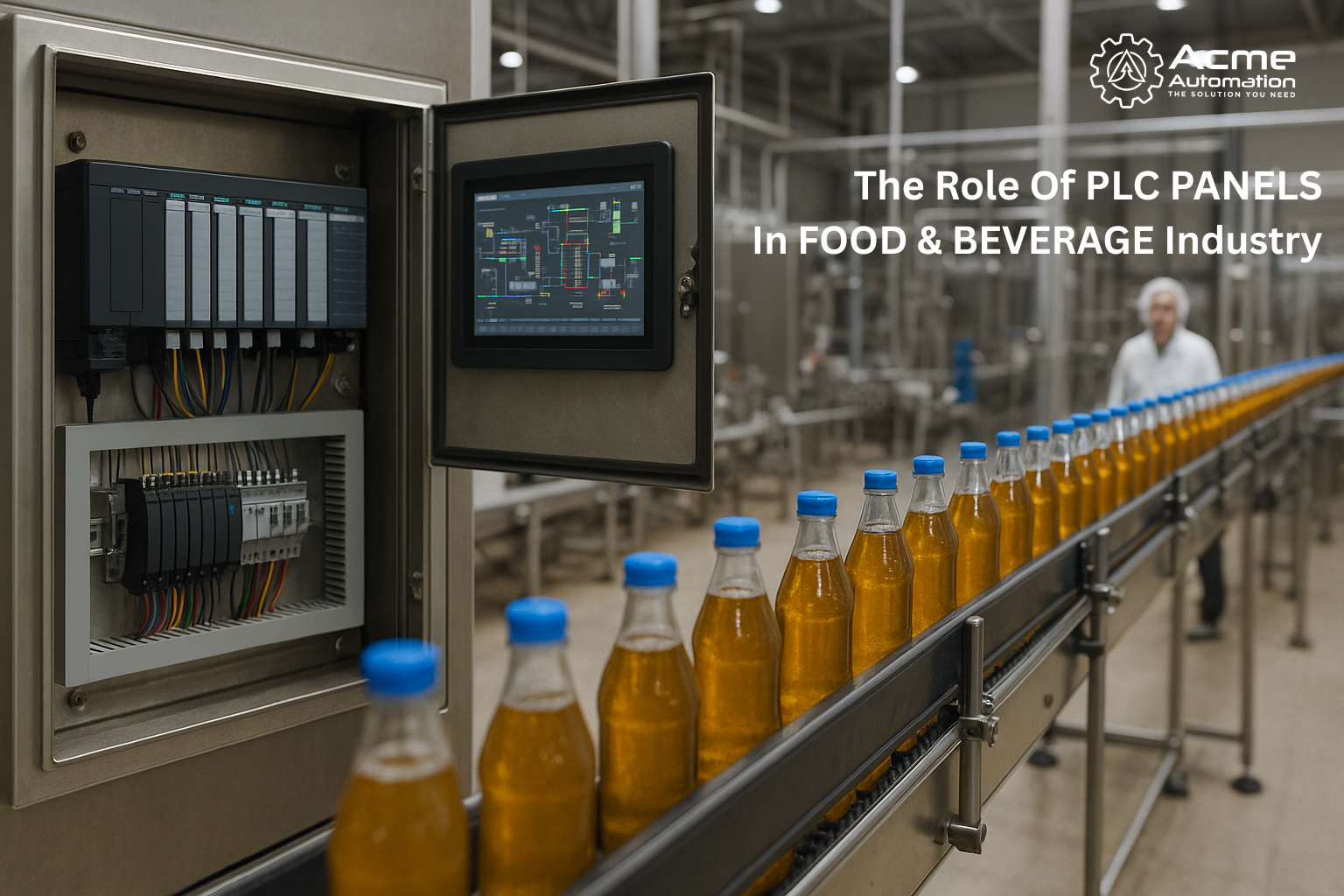
The food and beverage industry is one of the most dynamic and highly regulated sectors in the world. Consumer demand for quality, safety, and efficiency has never been higher, while manufacturers face constant pressure to optimize operations and remain compliant with international standards. In this landscape, food industry automation has become a necessity rather than an option. At the heart of this transformation are Programmable Logic Controller (PLC) panels, which serve as the backbone for modern automation in food processing plants.
What are PLC Panels?
A PLC (Programmable Logic Controller) is a rugged, industrial-grade computer designed to control machines, processes, and production lines. PLC panels house these controllers along with necessary input/output modules, wiring, and protection devices. They act as the central nervous system of automated systems, collecting signals from sensors, processing logic, and issuing commands to actuators, motors, conveyors, and other equipment.
In the food industry automation landscape, PLC panels play a critical role in ensuring precision, consistency, and safety while managing complex processes like mixing, packaging, filling, cleaning, and quality control.
Why the Food & Beverage Industry Needs PLC Panels
Unlike other industries, food and beverage manufacturing comes with unique challenges:
- Strict hygiene and safety standards (ISO, FDA, HACCP, GMP).
- High-volume, continuous production with minimal downtime.
- Complex recipes and frequent product variations.
- Energy efficiency and cost control.
- Demand for real-time traceability and reporting.
PLC panels address these challenges by enabling reliable, flexible, and scalable automation solutions that adapt to production requirements without compromising safety or compliance.
Key Applications of PLC Panels in Food & Beverage Industry
1. Automated Mixing & Blending
In food processing, consistency is everything. Whether it’s mixing dough, blending beverages, or preparing sauces, PLC panels ensure precise control over ingredient proportions, mixing times, and temperatures. With PLC-based automation, manufacturers eliminate manual errors, maintain uniform taste, and achieve higher throughput.
2. Packaging & Bottling Lines
From plastic bottles to pouches and cans, packaging is one of the most demanding operations in food plants. PLC for food processing ensures synchronized operation of conveyors, fillers, cappers, and labelers. This reduces waste, increases speed, and ensures accurate filling volumes. Modern PLCs even integrate with vision systems to detect faulty packaging and reject defective units automatically.
3. Temperature & Humidity Control
Food quality and shelf life depend heavily on maintaining strict environmental conditions during processing and storage. PLC panels continuously monitor and regulate temperature, humidity, and pressure through sensors and actuators. This ensures compliance with food safety regulations and reduces spoilage.
4. Clean-in-Place (CIP) Systems
Hygiene is paramount in the food industry. PLC panels automate CIP (Clean-in-Place) systems to ensure equipment is cleaned with the right mix of water, chemicals, and steam. By automating cleaning cycles, manufacturers save time, reduce water consumption, and ensure consistent sanitation standards.
5. Quality Control & Inspection
Advanced PLC panels can be integrated with SCADA (Supervisory Control and Data Acquisition) systems and vision inspection devices. These setups monitor quality parameters such as fill levels, seal integrity, labeling accuracy, and packaging strength in real time. Any deviation triggers immediate corrective actions, ensuring only high-quality products reach the market.
6. Batch Processing & Recipe Management
Food manufacturers often produce multiple product variations on the same line. PLC-based automation allows easy recipe management and quick switching between batches. Operators can load pre-programmed recipes directly from the HMI (Human Machine Interface), reducing changeover time and ensuring consistent production quality.
7. Energy Optimization
The food and beverage sector is energy-intensive, with equipment like ovens, chillers, and conveyors consuming significant power. PLC panels track energy usage across machines, identify inefficiencies, and optimize load distribution. This contributes not only to cost savings but also to sustainability initiatives.
Benefits of PLC Panels in Food Industry Automation
- Increased Efficiency – Automation minimizes downtime, accelerates production, and ensures consistent product quality.
- Improved Safety & Compliance – PLCs enable full traceability, record process data, and support audit readiness for FDA, GMP, and ISO standards.
- Flexibility – Easily scalable for new product lines, packaging formats, or recipe variations.
- Cost Reduction – Optimized resource usage, reduced labor costs, and predictive maintenance lower operational expenses.
- Real-Time Insights – Integration with SCADA dashboards provides operators with live data for informed decision-making.
- Reliability – PLC panels are built to withstand harsh environments, ensuring long service life and minimal failures.
Case Examples: PLC in Action
- Dairy Plants: Automated milk pasteurization with precise temperature control ensures safe and high-quality output.
- Beverage Industry: PLC-driven bottling lines achieve thousands of bottles per hour with exact fill levels.
- Bakery Units: PLC panels regulate ovens, conveyors, and mixers for consistent baking results.
- Confectionery: Automation ensures accurate ingredient dosing and consistent flavor profiles across batches.
These examples highlight how PLC for food processing directly translates into higher productivity and improved product quality.
Future of PLC Panels in Food & Beverage Industry
The future of food industry automation goes beyond just control. With the integration of Industrial Internet of Things (IIoT), AI, and cloud analytics, PLCs are becoming smarter and more connected. Advanced PLC panels now support remote monitoring, predictive maintenance, and AI-driven insights for improved decision-making.
This shift towards smart factories empowers food manufacturers to achieve operational excellence, meet sustainability goals, and maintain competitiveness in global markets.
Why Partner with ACME Automation?
At ACME Automation, we specialize in designing and delivering advanced PLC panels tailored for the food and beverage industry. With deep expertise in food industry automation, our solutions include:
- Customized PLC panels with industry-specific features.
- Integration with SCADA dashboards and one-click reporting.
- Compliance-ready systems for ISO, FDA, HACCP, and GMP audits.
- Energy optimization strategies to reduce operating costs.
- End-to-end support — from design and installation to training and maintenance.
Whether you’re setting up a new production line or upgrading to smart automation, ACME Automation is your trusted partner in digital transformation.
Final Thoughts
PLC panels are no longer just about switching machines on and off — they are about driving intelligence, efficiency, and compliance across the food & beverage industry. By embracing PLC for food processing, manufacturers can streamline production, reduce costs, and consistently deliver safe, high-quality products to consumers.
The journey toward smarter, safer, and more sustainable factories begins with the right automation partner. Let ACME Automation help you shape the future of your food processing operations.
📧 sales@acmeautomation.in
📞 +91 97279 97049
🌐 www.acmeautomation.in