

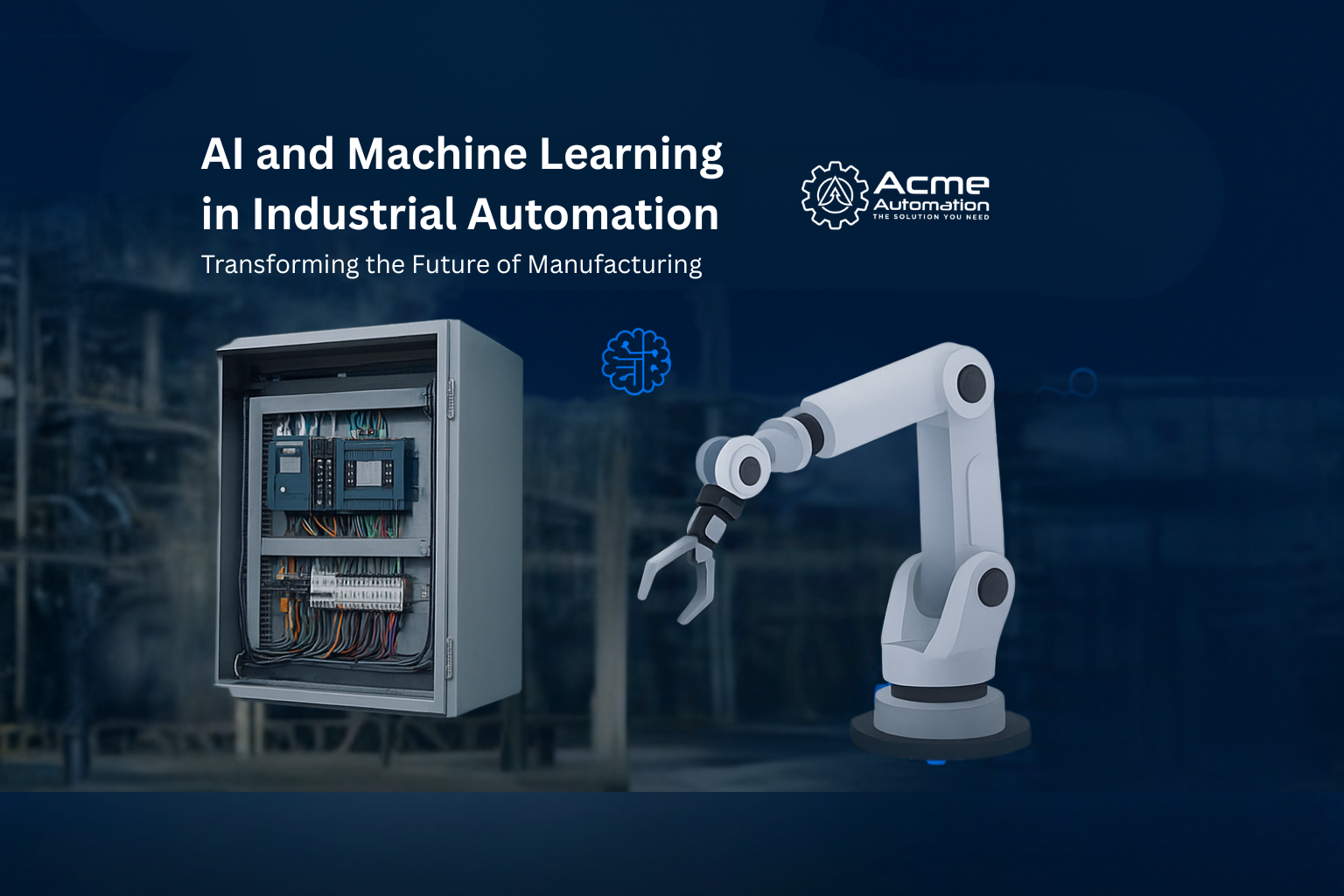
Industrial automation has come a long way from traditional relay-based control systems to advanced PLCs, SCADA, and now, artificial intelligence (AI) and machine learning (ML). Today, businesses across industries—from chemical plants and food & beverage processing to water treatment plants and heavy equipment manufacturers—are leveraging AI in automation to maximize efficiency, minimize downtime, and stay competitive in an increasingly digital-first world.
In this blog, we’ll explore how machine learning for manufacturing is shaping the future of industrial automation, its benefits, applications, and why companies should invest in these technologies today.
Understanding AI and Machine Learning in Automation
Artificial Intelligence (AI) refers to the simulation of human intelligence by machines that are capable of decision-making, problem-solving, and learning from data. Machine Learning (ML), a subset of AI, involves algorithms that improve automatically through experience.
When combined with industrial automation systems, AI and ML provide intelligent decision-making, advanced analytics, and adaptive control mechanisms that go beyond traditional automation methods.
For instance:
- AI in automation can predict equipment failures before they occur.
- Machine learning for manufacturing can optimize production lines by analyzing data from sensors, PLCs, and IoT devices in real-time.
Key Benefits of AI and Machine Learning in Industrial Automation
- Predictive Maintenance
Traditional maintenance follows either scheduled or reactive patterns. With AI-driven predictive maintenance, plants can analyze vibration, temperature, and electrical data to identify early signs of wear and tear. This reduces unplanned downtime, lowers repair costs, and extends equipment life. - Increased Productivity
AI-powered automation systems continuously analyze workflows and suggest adjustments to improve efficiency. This results in higher throughput, reduced cycle times, and less energy consumption. - Improved Quality Control
Machine learning for manufacturing enables automated defect detection using image recognition, sensor data, and advanced algorithms. Food and beverage industries, for example, use ML to monitor packaging consistency and detect anomalies in product quality. - Enhanced Safety
AI can monitor hazardous conditions in real-time, preventing accidents in industries such as mining, chemical processing, and water treatment plants. Automation minimizes human intervention in dangerous environments, keeping employees safe. - Data-Driven Decision Making
AI-powered dashboards provide actionable insights by analyzing massive amounts of data from production lines, SCADA systems, and IoT-enabled devices. Managers can use this data to optimize processes, reduce waste, and make smarter business decisions.
Applications of AI and Machine Learning in Industrial Automation
- Smart Factories (Industry 4.0)
Smart factories are powered by AI, IoT, robotics, and cloud computing. Here, AI in automation ensures that all equipment communicates seamlessly, enabling predictive analytics, self-optimization, and autonomous decision-making. - Process Optimization in Chemical Plants
Chemical plants generate complex data sets involving temperature, pressure, and chemical reactions. Machine learning algorithms analyze these variables to maintain stability, reduce energy consumption, and prevent accidents. - Water Treatment Plants
In water treatment facilities, AI can predict demand fluctuations, optimize chemical dosing, and monitor equipment conditions to ensure reliable and safe water supply. - Food & Beverage Industry
Machine learning for manufacturing ensures consistent quality by detecting anomalies in packaging, labeling, and filling operations. AI also helps maintain hygiene and compliance with regulatory standards. - Mining and Crushers
Heavy industries such as mining benefit from AI-powered automation systems that analyze vibration and load data to prevent crusher breakdowns. Predictive maintenance ensures continuous operation, reducing costly shutdowns. - Robotics in Manufacturing
AI-driven robots equipped with machine vision can assemble, weld, or paint with precision. They can adapt to changing product designs and production schedules, ensuring flexibility in manufacturing.
How AI is Revolutionizing Industrial Control Systems
Traditional PLCs and MCC panels are now being integrated with AI-driven platforms. Instead of just executing pre-programmed logic, AI-enhanced control systems can:
- Adapt to real-time changes.
- Automatically adjust production speed.
- Predict faults before they occur.
- Optimize energy consumption in plants.
This shift from fixed automation to intelligent automation is what gives industries a competitive advantage in today’s fast-paced market.
Challenges in Implementing AI in Automation
While the benefits are clear, adopting AI and machine learning in industrial automation comes with challenges:
- High Initial Investment: Advanced AI systems require infrastructure, skilled engineers, and significant capital.
- Data Integration: Legacy systems may not support real-time data transfer, making integration complex.
- Skill Gap: Engineers and operators need training to handle AI-powered systems effectively.
- Cybersecurity Risks: As plants become more connected, protecting data and systems from cyberattacks is crucial.
The Future of AI in Automation
As industries embrace Industry 4.0 and move toward Industry 5.0, where humans and AI-powered machines collaborate, the role of artificial intelligence will only grow stronger. With advances in machine learning for manufacturing, cloud-based monitoring, and IoT-enabled smart devices, factories of the future will be safer, more efficient, and highly sustainable.
Companies investing in AI today are setting the foundation for tomorrow’s success. Whether in crushers, chemical plants, water treatment, or food & beverage industries, AI in automation will become the standard for efficiency, quality, and competitiveness.
Conclusion
AI in automation and machine learning for manufacturing are no longer futuristic concepts—they are real, practical tools driving innovation in industrial automation. From predictive maintenance and quality control to safety improvements and smart factory integration, these technologies are transforming how industries operate.
Forward-looking businesses that embrace these advancements will not only reduce costs and downtime but also unlock new levels of productivity and efficiency.
Get in Touch with Acme Automation
At Acme Automation, we specialize in delivering advanced industrial automation solutions tailored for industries such as crushers, chemical plants, water treatment facilities, and food & beverage processing units. From PLC and VFD panels to SCADA development and AI-driven automation systems, our team ensures safety, reliability, and efficiency in every project.
📧 Email: sales@acmeautomation.in
🌐 Website: www.acmeautomation.in
📍 Address: 40,41 Sahajanand Industrial Hub, GIDC Kathwada, Ahmedabad, Gujarat, India
📞 Phone: +91 97277 56069 / +91 97279 97049