

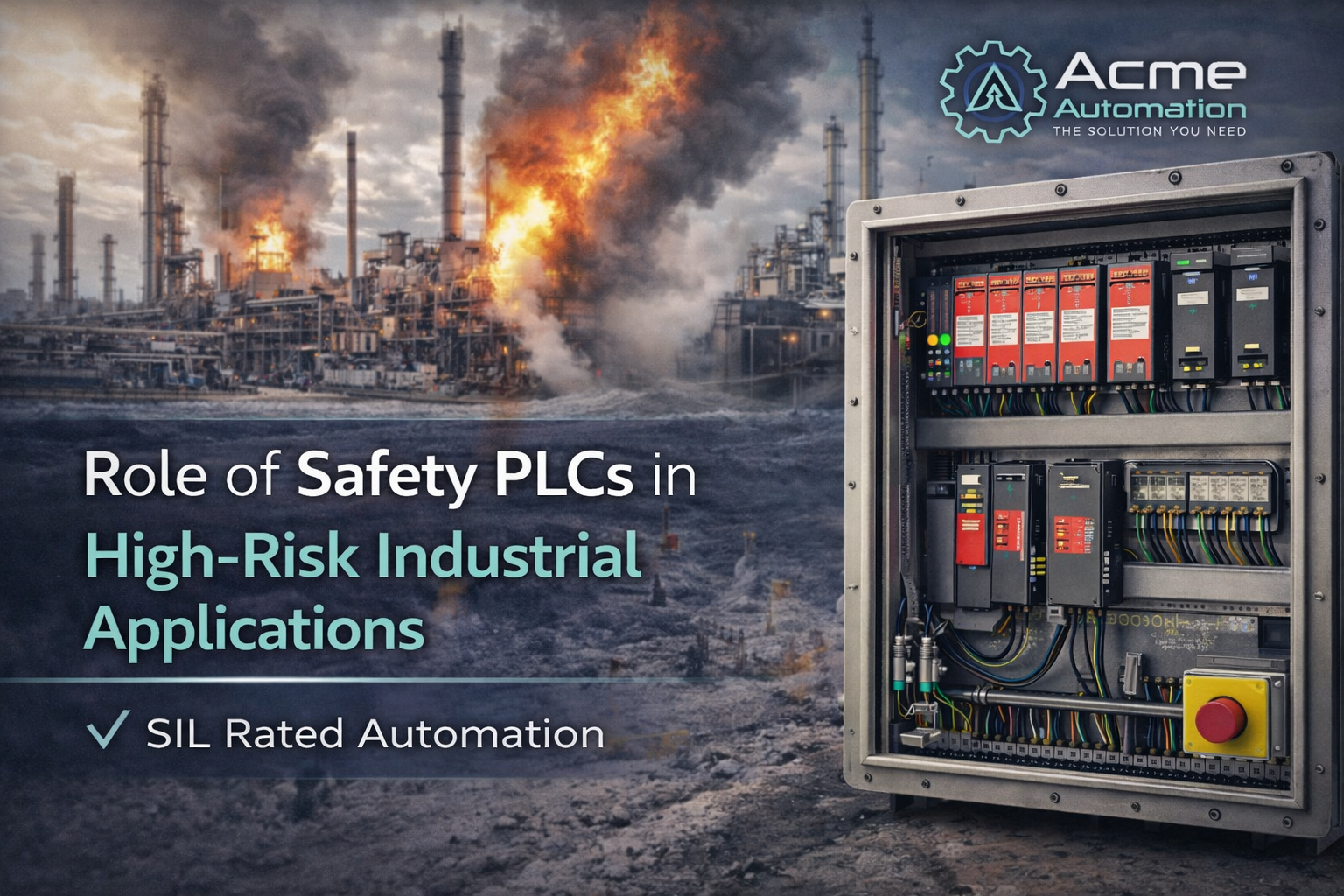
In high-risk industrial environments, a single failure can result in serious injuries, equipment damage, environmental hazards, or costly downtime. Industries such as chemical processing, power generation, crusher plants, oil & gas, and heavy manufacturing demand fail-safe automation systems that go beyond standard PLC control. This is where Safety PLC systems become essential.
Safety PLCs form the backbone of SIL rated automation, ensuring processes remain safe, compliant, and reliable even under abnormal or fault conditions.
What Is a Safety PLC?
A Safety PLC is a specialized programmable logic controller designed to execute safety-critical control functions. Unlike standard PLCs, Safety PLCs are built with redundant architecture, self-diagnostics, and certified safety logic to meet international safety standards.
They are used to:
- Detect hazardous conditions
- Execute emergency shutdowns
- Isolate unsafe equipment
- Protect personnel and assets
Understanding SIL Rated Automation
SIL (Safety Integrity Level) defines the reliability and performance required of a safety system. It is specified under international standards such as IEC 61508 and IEC 61511.
SIL Levels:
- SIL 1 – Basic risk reduction
- SIL 2 – Medium risk reduction
- SIL 3 – High risk reduction
- SIL 4 – Very high risk (rare in industrial plants)
High-risk industrial applications typically require SIL 2 or SIL 3 rated automation systems.
Why Standard PLCs Are Not Enough
Standard PLCs are designed for process control, not safety control. While they manage operations efficiently, they lack:
- Redundant safety logic
- Certified fail-safe behavior
- Continuous self-monitoring
- Guaranteed safe shutdown performance
Using standard PLCs for safety applications increases risk and may violate statutory safety regulations.
Role of Safety PLC Systems in High-Risk Industries
1. Emergency Shutdown Systems (ESD)
Safety PLCs execute instant emergency shutdowns during:
- Overpressure
- High temperature
- Gas leakage
- Mechanical failure
This prevents escalation of hazardous situations.
2. Machine & Personnel Safety
In crusher plants, material handling systems, and heavy machinery:
- Safety PLCs monitor emergency stop circuits
- Light curtains and safety scanners
- Door interlocks and access gates
They ensure machines stop safely when operators enter danger zones.
3. Process Interlocking & Hazard Prevention
Safety PLCs enforce critical interlocks, preventing:
- Incorrect startup sequences
- Simultaneous unsafe operations
- Equipment damage due to logic failure
This is vital in chemical reactors, boilers, and pressurized systems.
4. Fire & Gas Detection Systems
In oil & gas, chemical plants, and power stations:
- Safety PLCs integrate fire detectors
- Gas sensors
- Smoke and flame detectors
They trigger alarms, isolation valves, and evacuation procedures automatically.
Industrial Applications of Safety PLCs
Safety PLC systems are widely used in:
- Chemical & Petrochemical Plants
- Oil & Gas Processing Units
- Crusher & Mining Plants
- Power Generation Facilities
- Cement & Steel Plants
- Water Treatment Plants
- Food & Beverage High-Speed Lines
Any industry where failure can cause injury, environmental harm, or major losses requires SIL rated automation.
Integration of Safety PLCs with Automation Panels
Safety PLCs work alongside:
- Standard PLC panels
- MCC & VFD panels
- Instrumentation panels
- SCADA systems
They operate independently yet communicate with process control systems for status monitoring and diagnostics.
This separation ensures functional safety without compromising process efficiency.
Advantages of Safety PLC Systems
✔ Certified compliance with safety standards
✔ Reduced accident risk
✔ Protection of personnel & assets
✔ Lower insurance & liability exposure
✔ Improved plant reliability
✔ Compliance with statutory norms
Custom Safety PLC Solutions by ACME Automation
At ACME Automation, we design and implement custom Safety PLC systems tailored to high-risk industrial applications.
Our Safety Automation Capabilities:
- SIL 2 / SIL 3 compliant automation solutions
- Safety PLC panel design & manufacturing
- Emergency shutdown logic development
- Safety interlock design
- Integration with SCADA & DCS
- Panels for Indian and export projects
We ensure every safety panel is engineered, tested, and validated to meet application-specific safety requirements.
Why Choose ACME Automation?
✔ Expertise in high-risk industrial automation
✔ Custom-built Safety PLC panels
✔ International standard compliance
✔ Reliable hardware & proven logic
✔ Strong after-sales support
Conclusion
Safety PLC systems are no longer optional in high-risk industrial environments. They are essential for protecting lives, equipment, and the environment while ensuring regulatory compliance.
By implementing SIL rated automation with Safety PLCs, industries can operate confidently, safely, and efficiently—even under the most demanding conditions.
Partner with ACME Automation to build robust, reliable, and compliant safety automation systems.
Contact ACME Automation Today
📧 sales@acmeautomation.in
📞 +91 97277 56069
🌐 www.acmeautomation.in
ACME Automation – The Solution You Need